From Frustrated to Frictionless: How Workday’s Return App Transformed My Online Shopping
Shopping used to stress me out—especially returns. I’d dread the emails, the forms, the trips to the post office. But recently, something changed. A simple app at work—Workday’s return and exchange tool—started making my personal shopping easier, faster, and calmer. It’s not just about tech; it’s about time, peace of mind, and taking control. This is how a work tool quietly improved my everyday life. What began as a small discovery turned into a real game-changer—one that reshaped how I think about convenience, balance, and even self-care in the middle of a busy week. And honestly? I wish I’d known about it sooner.
The Return Rut: When Online Shopping Feels Like a Chore
Let’s be honest—online shopping was supposed to make life easier. No lines, no parking, just click and wait. But somewhere along the way, the joy of hitting ‘buy now’ got overshadowed by the headache of what happens when things go wrong. We’ve all been there. You order a dress for your daughter’s school play, only to open the package and realize it’s two sizes too big. Or you buy a coffee maker as a birthday gift, only to find out your sister already has the exact same model. What should be a quick fix turns into a to-do list item that lingers for days.
I used to spend entire Sunday mornings sorting through return envelopes, hunting for printed labels, and driving to the post office just before closing time. And that’s if everything went smoothly. Sometimes the label wouldn’t print. Other times, the carrier wouldn’t scan the package, and I’d be stuck in email loops with customer service for weeks. I remember one winter, returning a pair of boots my son outgrew before he even wore them. The process took three weeks, two phone calls, and more frustration than the original purchase was worth. It wasn’t just the time—it was the mental weight of it. That little red notification on my phone wasn’t just a reminder; it was a tiny stress ball in my pocket.
And I know I’m not alone. So many of us—especially those of us juggling work, family, and everything in between—don’t have the bandwidth for these little battles. We want to enjoy the benefits of modern shopping without the hidden labor. We want to feel in control, not defeated by a shipping label. The truth is, returns aren’t an exception—they’re part of the experience. And when that part is broken, it taints the whole thing. That’s why when I finally found a better way, it didn’t just change how I return things. It changed how I feel about shopping altogether.
First Glimpse: Discovering the Workday Return Feature
The funny thing is, I didn’t find this solution on a tech blog or a mom forum. I found it at my desk, while updating my time sheet in Workday. You know that moment when something small catches your eye because it doesn’t quite fit? That’s what happened. I saw a new tile labeled ‘Return & Exchange’ and paused. I thought, Wait, is that for work laptops or uniforms? It never occurred to me that it could be for anything personal. I clicked on it out of curiosity, and there it was—clean, simple, with options for drop-off, pickup, and tracking. No fine print. No pop-ups. Just… easy.
A few days later, I had my first real test. I’d ordered a blazer online for a work event, but when it arrived, the shoulders were too tight. I didn’t want to deal with the usual hassle, so on a whim, I opened Workday again and tried using the return feature. I held my breath as I scanned the receipt. I expected a message saying, This is for company assets only. But instead, it worked. Just like that. I selected ‘Clothing – Sizing Issue,’ chose a drop-off location at a nearby carrier hub, and the system generated a prepaid label instantly. I walked out, stuck the label on the box, and dropped it off on my way to pick up my daughter from dance class. No extra app. No new login. No waiting.
That night, I told my husband about it, and he looked at me like I’d discovered a secret government program. You returned something through your work app? I laughed, but I also felt a little guilty—like I was gaming the system. But then I checked the policy, and sure enough, it was a real employee benefit. HR had rolled it out quietly, calling it a ‘personal convenience perk’ to support work-life balance. It wasn’t widely advertised. No banners. No training sessions. Just there, like a quiet gift. And once I realized it was meant to be used, I started paying attention. I noticed coworkers mentioning return pickups in the break room. One colleague even said, I returned my mother’s birthday gift through Workday last week—saved me a whole afternoon. That’s when it hit me: this wasn’t a glitch. It was a real, thoughtful feature—one that was improving lives one package at a time.
How It Works: Simple Steps, Real Results
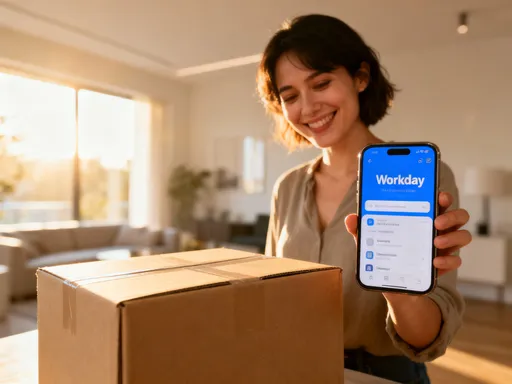
Let me walk you through it, step by step, because the beauty is in how straightforward it is. First, you open the Workday app—same one you use for time-off requests or checking your paystub. No separate download. No extra password. Then, you tap on the ‘Return & Exchange’ tile. It’s right there on your home screen if your company has enabled it. Once inside, you either scan the original receipt or type in the order number. The system pulls up the purchase details automatically. From there, you select the item, choose a reason—like ‘Wrong Size,’ ‘Damaged,’ or ‘Gift Not Needed’—and decide how you want to return it.
You can pick a drop-off point—there are usually several within 10 minutes of most neighborhoods—or schedule a pickup at your home. I’ve used both, and honestly, the pickup is my favorite. Last month, I returned a kitchen gadget I didn’t have space for. I scheduled the pickup for a Tuesday morning, and the driver came right on time. I didn’t have to be home. I just left the box by the door with the label on it. Done. The app updated the tracking in real time, and I got a refund confirmation in under 48 hours. Compare that to the old way—printing labels at 11 p.m., worrying about cutoff times, or standing in line behind someone arguing about package weight—and it feels like a different century.
What really surprised me was how little I had to think about it. There’s no stress about whether the label is stuck on right, or if the carrier will scan it. Workday syncs directly with the shipping provider, so the moment it’s picked up, the system knows. I get gentle push notifications: ‘Your return has been collected,’ ‘Label generated,’ ‘Refund processed.’ It’s not flashy, but it’s reliable. And for someone like me—who values peace of mind over bells and whistles—that’s everything. I remember using it for a pair of work shoes that pinched my toes. I started the return at 8:30 a.m. before my meeting, dropped the box at a drop-off locker by 9:15, and by lunchtime, I’d already received the exchange confirmation. No calls. No follow-ups. Just results.
Beyond Convenience: Time, Calm, and Control
Here’s what no one talks about enough: the emotional relief of a smooth return. It’s not just about saving time—though I’ve easily reclaimed three to four hours a month. It’s about what that time and energy allows me to do instead. Last weekend, instead of driving to the post office, I sat on the porch with a cup of tea and watched my kids build a fort in the living room. That moment of calm? That’s priceless. And it’s not just the big moments. It’s the small ones—like being able to focus during a work call without wondering if my return label expired, or not having to set three reminders just to mail a package.
I’ve started to think of it as mental decluttering. Every time I use the app, I’m not just sending back a sweater. I’m removing a tiny source of anxiety from my day. And over time, those little wins add up. I feel more in control. More capable. Like I’m not constantly chasing after loose ends. That sense of order has spilled over into other parts of my life. I’ve become more intentional about what I buy, knowing that if it doesn’t work out, it won’t become a burden. I’ve also become kinder to myself. I used to beat myself up for returning things—like it was a failure of judgment. Now I see it as part of being smart with my time and resources. It’s not wasteful. It’s wise.
And let’s talk about family. As a mom, I’m always trying to protect my time so I can be present. This tool has given me back pockets of it—moments I can spend helping with homework, cooking a real meal, or just sitting with my teenager and asking about her day without distraction. That’s the real win. It’s not just about shopping. It’s about living. When technology removes friction instead of adding to it, it doesn’t just serve us—it supports us. It lets us breathe. And for women in our 30s, 40s, and 50s—who are often the glue holding everything together—that kind of support isn’t a luxury. It’s a necessity.
Work Tool, Personal Win: The Unexpected Crossover
I’ll admit, I was skeptical at first. How could a system designed for managing company laptops and ID badges also handle my personal returns? But then I did a little digging. Turns out, Workday partnered with major carriers and retailers to extend the same enterprise-grade return infrastructure to employees for personal use. It’s part of a growing trend—companies recognizing that when they support employees’ personal lives, everyone wins. Fewer distractions. Less stress. Better focus at work. It’s not a loophole. It’s a benefit, quietly built into the system.
What struck me most was how few people knew about it. At a team lunch, I mentioned it casually, and three colleagues stared at me like I’d revealed a secret password. You can do that? one asked. Another said, I’ve been using a different app, but it’s always glitchy. We ended up having a mini workshop at the coffee machine, walking through the steps together. It felt good—like I was passing on something valuable. And it made me realize how often we overlook the tools already in our hands. We’re so used to downloading new apps, signing up for services, or paying for convenience that we miss what’s already available. This wasn’t something I had to earn or unlock. It was just… there, waiting for me to notice.
Since then, I’ve seen more people using it. I’ve heard snippets in the hallway: Did you return that through Workday? Oh, that’s how you did it! It’s becoming part of our office culture—not in a flashy way, but in a practical, helpful one. And that’s what I love about it. It’s not about impressing anyone. It’s about making life a little smoother. The fact that it started as a work tool doesn’t make it less personal. If anything, it makes it more meaningful. It’s a reminder that the lines between work and life aren’t always walls—they can be bridges. And sometimes, the most powerful tools come from the places we least expect.
Making It Work for You: Tips from Real Experience
If you’re curious about trying this, here’s what I’ve learned from actually using it every few weeks. First, check with your HR department or log into Workday and look for the ‘Return & Exchange’ option. Not every company has enabled it yet, but more are adding it every month. If you don’t see it, ask. Benefits like this often start small and grow based on employee interest.
When you do use it, keep your receipts or order confirmations handy—either digitally or printed. The system works best when it can verify the purchase. I save mine in a folder on my phone, labeled ‘Returns.’ And don’t wait too long. Most retailers have return windows, and while the app makes the process fast, it can’t override store policies. I try to start returns within a week of realizing something’s not right. That way, I stay ahead of deadlines without stress.
Timing matters, too. If you choose pickup, pick a morning when you’ll be home or can leave the package by the door. I once scheduled one for a day I forgot I had a doctor’s appointment—and missed the driver. No big deal, but it delayed the process by a day. Drop-offs are more flexible. I like to combine them with errands—drop the box at the carrier hub while I’m grabbing coffee or picking up dry cleaning. And if a return seems stuck? Don’t panic. There’s a ‘Contact Support’ button right in the app. I used it once when a refund didn’t post. A real person responded within two hours and fixed it immediately. No runaround. No bots.
And if you’re hesitant—like my friend Lisa was—just try it once. She said, Isn’t that for company stuff? I walked her through it step by step, and now she uses it more than I do. It’s like having a personal assistant, she told me last week. That’s the goal—not just to make returns easier, but to make you feel supported. You don’t have to be a tech expert. You don’t have to learn anything new. Just open the app you already use, tap a button, and let the system do the rest. It’s not magic. It’s just good design.
The Bigger Picture: Tech That Serves Life, Not the Other Way Around
This whole experience has made me rethink what good technology looks like. It’s not the flashiest app. It’s not the one with the most features. It’s the one that disappears into your life and makes things easier without asking for attention. Workday’s return tool isn’t trying to impress me. It’s not sending me push notifications to up-sell me. It’s not collecting my data for ads. It just works. And in a world full of noisy, demanding tech, that quiet reliability is revolutionary.
I want more tools like this—ones that respect my time, my energy, and my intention. Tools that don’t add to my to-do list but help me cross things off. Because at this stage in life, I’m not looking for more complexity. I’m looking for more calm. More clarity. More moments that feel like mine. And when technology helps me get there, I notice. I appreciate it. I trust it.
So here’s my hope: that more companies start designing with real life in mind. That more of us learn to look for the quiet helpers already in our pockets. And that we give ourselves permission to use them—without guilt, without hesitation. Because taking care of yourself isn’t selfish. It’s smart. It’s strong. And sometimes, it starts with something as simple as a return label that prints itself. The best tech doesn’t change your life with a bang. It changes it with a breath. A pause. A moment of ease. And honestly? I’ll take that any day.