From Passive Scrolling to Daily Progress: How Video Tutorials Transformed My Habit Journey
You know that feeling when you want to learn something—cooking, coding, or just staying consistent with exercise—but you keep falling off track? I did too. For years, I bounced between motivation and frustration, trying apps, planners, books. Nothing stuck. Then I found myself drawn not to complex systems, but to short, real-life video tutorials—simple clips that showed exactly what to do, no fluff. Slowly, something shifted. What started as casual watching became a daily habit engine. This is how my life quietly changed.
The Habit Struggle: When Motivation Fades and Guilt Grows
I used to start strong—January goals, weekend plans, fresh notebooks. I’d light a candle, pick a color-coded planner, and promise myself this was the time I’d finally get organized, eat better, move more. And for a few days, I did. But by Tuesday, I’d be back to mindless scrolling, half-watching a cooking show while eating takeout, feeling stuck and a little ashamed. The problem wasn’t laziness; it was lack of clarity. I didn’t need more willpower—I needed a clear path. Without one, habits collapsed like sandcastles at high tide. I’d watch random videos for inspiration, but they didn’t translate into action. The gap between “wanting to change” and “actually doing it” felt wider than ever.
Have you ever felt that? You see someone post about their 5 a.m. routine or their bullet journal with perfect calligraphy, and you think, I should do that. But then you open your laptop, get distracted by an email, check the news, and suddenly it’s bedtime. The dream of change fades, replaced by that quiet guilt: I’m not doing enough. I was stuck in that loop for years. I’d buy new apps promising habit tracking, but after a week, I’d forget to log anything. I’d download a meditation app, try it once, and never return. Books sat on my nightstand, unread. I wasn’t failing because I didn’t care—I cared deeply. I failed because the tools were too abstract, too disconnected from my real life. They asked me to be someone I wasn’t yet, instead of helping me take the first small step.
And then there was the overwhelm. So many choices. Should I start with fitness? Mindfulness? Learning a language? Decluttering? I’d jump from one idea to the next, never sticking long enough to see results. It wasn’t just about time—it was about direction. I needed something that didn’t just tell me what to do, but showed me, in a way that felt possible. Something that met me where I was: tired, busy, but still hopeful. That’s when I began to notice something different—not in a fancy app or a pricey course, but in the simplest corner of the internet: short, real-life video tutorials.
The Turning Point: Finding Clarity in Short, Real-Life Video Tutorials
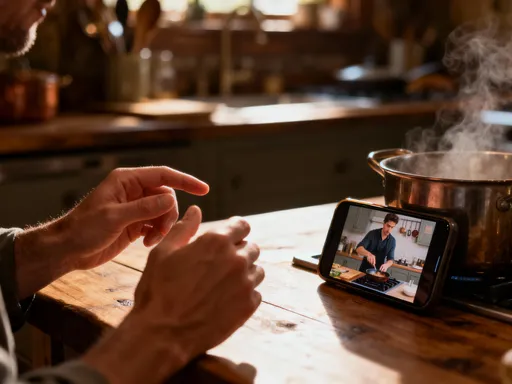
One rainy afternoon, I was scrolling—again—looking for something to pull me out of my funk. I wasn’t searching for anything specific, just a little spark. Then I saw it: a five-minute video titled “How I Meal Prep on Sundays in 20 Minutes.” No dramatic music, no influencer in a spotless kitchen. Just a woman in a cozy sweater, standing in her real kitchen, showing how she chopped vegetables, portioned grains, and stored everything in reusable containers. She spoke softly, moved slowly, and even laughed when she dropped a spoon. It felt so… human.
I clicked play. And for the first time in months, I didn’t just watch—I did. Right after the video ended, I went to my fridge, pulled out some rice and beans, and followed her steps. I didn’t make it perfect. My portions were uneven, and I forgot to add spices. But I did it. And that night, I ate a home-prepped meal instead of ordering pizza. The next day, I searched for a quick yoga flow—something gentle for mornings when my back ached. I found a seven-minute video with a teacher who reminded me to breathe and move slowly. I tried it. Then I did it again the next day. And the next.
These weren’t grand courses or 30-day challenges. They were bite-sized, real, and doable. No pressure, no perfection. Just simple actions, clearly shown. For the first time, learning felt accessible, not overwhelming. I wasn’t comparing myself to someone flawless—I was learning from someone who looked like me, lived like me, and made mistakes like me. That small shift sparked something real. Watching stopped being passive. It became preparation. Each video was a tiny invitation: Try this. Just once. See how it feels. And slowly, I began to say yes.
Why Video Tutorials Work: Mirroring Real Behavior, Not Just Teaching Concepts
Here’s what I’ve learned: we don’t learn best by reading or listening—we learn by seeing and doing. Text can explain how to fold a fitted sheet, but watching someone do it makes it click. Our brains are wired to mirror behavior. When we see someone perform an action—chopping an onion, stretching their shoulders, organizing a shelf—our own motor cortex lights up as if we’re doing it ourselves. It’s called mirror neuron activation, and it’s why video is such a powerful learning tool.
Think about it. Have you ever tried to assemble furniture from a paper manual? Pages of diagrams, arrows, cryptic symbols. Frustrating, right? But show me a 90-second video of someone putting together the same shelf, and I can follow along easily. That’s the power of visual learning. It cuts through confusion. It removes the guesswork. And when the video shows a real person—someone with messy hair, a cluttered counter, or a pet wandering into frame—it feels possible. You think, If they can do it in their kitchen, I can do it in mine.
Unlike abstract advice like “eat healthier” or “move more,” video tutorials give you a clear script: Do this, then this, then this. No interpretation needed. I don’t have to figure out what “a handful of spinach” looks like—I see it. I don’t have to wonder how long a “quick stretch” should take—I watch the timer. This reduces friction, and friction is the enemy of habit formation. The easier something is to start, the more likely we are to do it. And when we do it, we feel capable. That feeling? That’s the foundation of lasting change.
Building the Routine: How Watching Became Doing—One Clip at a Time
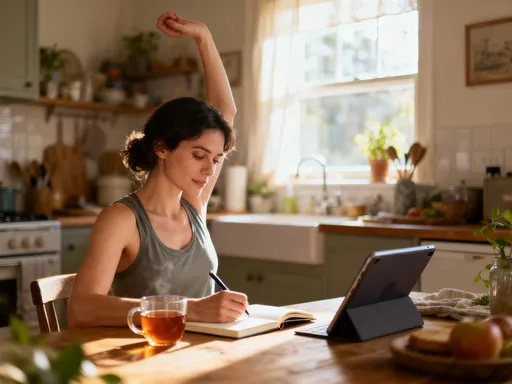
I didn’t force myself into a 30-day challenge. I didn’t set a goal to “watch one tutorial every day.” That would’ve felt like homework. Instead, I let curiosity guide me. Each morning, with my coffee in hand, I’d ask myself: What feels doable today? Some days, it was a three-minute video on how to make a creamy banana smoothie with oats and almond butter. I’d watch it, then walk to the kitchen and make it. Other days, it was a five-minute clip on setting up a focus playlist—how to pick songs without lyrics, keep the tempo steady, and limit it to 45 minutes. I’d follow along, create my own playlist, and try it while folding laundry.
The key was the “watch-then-do” loop. It wasn’t about consuming content—it was about translating it. I wasn’t passively watching for entertainment; I was actively preparing for action. And because each task was small, I never felt overwhelmed. There was no pressure to be perfect. If my smoothie was too thick, I added water. If I skipped a stretch, I’d try it tomorrow. The goal wasn’t mastery—it was practice.
Over time, the doing became automatic. I didn’t have to decide to stretch in the morning—I just did it, because it had become part of my routine. I didn’t have to debate whether to meal prep—I’d already seen the video, and I knew the steps. The habit wasn’t built from discipline. It was built from repetition with support. And the support came from those simple, real videos that showed me the way, one step at a time.
The Ripple Effect: Small Wins That Transformed My Confidence and Daily Flow
Here’s the beautiful thing about small habits: they compound. Once one stuck, others followed. Making my bed each morning—something I learned from a 4-minute video showing how to do it quickly—led to a sense of order. That sense of order made me want to do a short stretch. The stretch made me more aware of my body, which made me curious about better sleep. I found a video on a simple bedtime routine: dim the lights, write three things I was grateful for, read a few pages of a book. I tried it. And guess what? I started sleeping better.
Each small win built confidence. I wasn’t chasing transformation—I was living it, quietly. My days felt calmer, more intentional. I stopped relying on motivation and started trusting the process. Motivation is fleeting. It comes and goes like the weather. But a system—like watching a short video and doing one small thing—that’s reliable. That’s something you can count on, even on hard days.
And the more I did, the more I wanted to learn. I found videos on mending clothes, watering indoor plants, even basic home repairs. I’m not an expert, but I’m no longer afraid to try. I fixed a loose cabinet knob last week—something I would’ve called a handyman for a year ago. Now, I just searched for a video, watched it, and did it myself. That’s the real shift: not just learning skills, but believing I can learn. That belief changes everything.
Choosing the Right Content: Staying Grounded in Real Life, Not Hype
Not all tutorials are created equal. Early on, I fell for the flashy ones—the ones with perfect lighting, upbeat music, and promises like “Transform Your Life in 7 Days!” They looked impressive, but they left me feeling worse. Why? Because they didn’t feel real. The kitchens were too clean, the outfits too coordinated, the energy too high. I’d think, I could never do that in my house, with my kids, on my tired mornings. Those videos weren’t inspiring—they were discouraging.
So I learned to skip the hype. Instead, I looked for real voices, simple setups, and clear steps. I followed creators who taught with me, not at me. A shaky phone video of someone cooking in their tiny apartment kitchen? That’s gold. A mom showing how she packs school lunches while her toddler climbs on her back? That’s real. And real feels doable.
I also paid attention to tone. I avoided videos that made me feel guilty for not doing enough. Instead, I looked for kindness—creators who said things like, “It’s okay if you miss a day,” or “Start small, no pressure.” That compassion made me want to keep going. I wasn’t being scolded—I was being supported.
And I stayed away from anything that promised quick fixes. No “Lose 10 Pounds in 3 Days” or “Earn $10,000 from Home by Next Week.” Those are red flags. Real growth takes time. Real change is quiet. I focused on videos that respected my time, my energy, and my reality. That made all the difference.
A New Normal: How This Simple Shift Created Lasting Growth
Today, I don’t think of myself as “someone building habits.” I just live them. Video tutorials didn’t fix everything—they gave me a tool to grow, gently. I still scroll, but now I scroll with purpose. Instead of losing an hour to random clips, I search for something useful: how to store fresh herbs, how to do a five-minute neck release, how to clean my blender without disassembling it. I’ve built a little library of go-to videos that feel like trusted friends.
This isn’t about tech magic. It’s about human connection, clarity, and small acts of daily courage. It’s about saying, “I don’t know how to do this—yet.” And then finding someone who does, and letting them show me. It’s about turning “I should” into “I did.”
And that’s the real win. Not a perfect routine, not a flawless home, not a viral transformation. But the quiet pride of knowing I showed up for myself, one small step at a time. I’m more patient with myself. I’m more present in my days. I feel capable in a way I never did before.
If you’re feeling stuck, I invite you to try this: tonight, search for one short video on something small you’ve wanted to learn. Maybe it’s how to make a simple soup, how to organize your medicine cabinet, or how to do a basic skincare routine. Watch it. Then, tomorrow, do it. Just once. No pressure. No perfection. Just try.
Because sometimes, the smallest shift—a five-minute video, a single action—can start a quiet revolution in your life. And you don’t need a big plan to begin. You just need to press play.